
Hautes-Alpes Departmental Fire and Rescue Service
Securing and Simplifying Volunteer Firefighters’ Access to Operational Applications
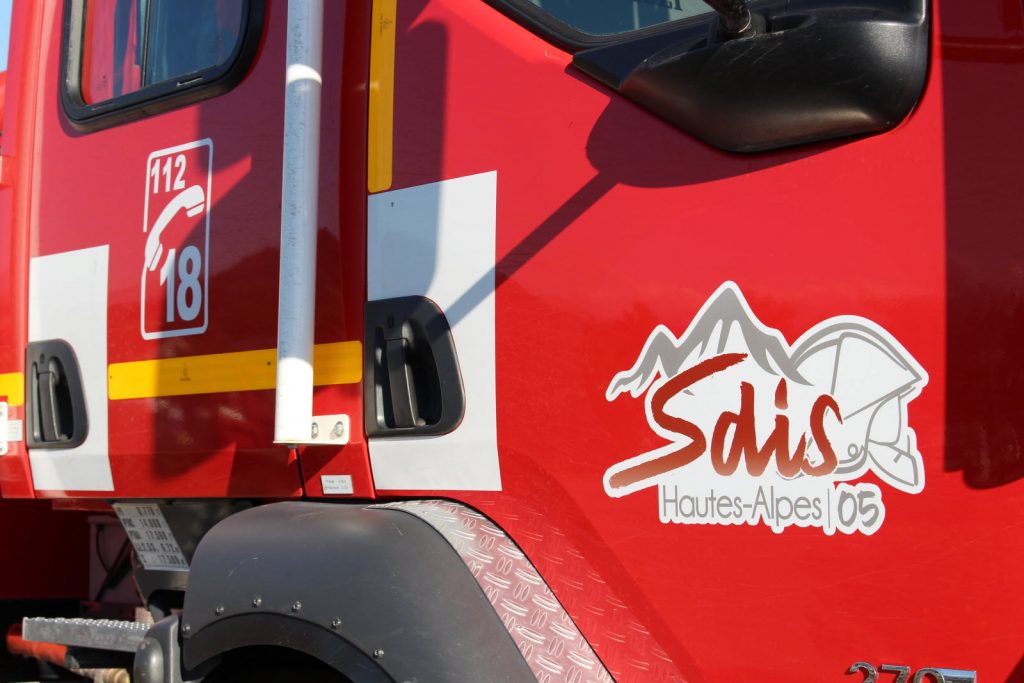
Hautes-Alpes Departmental Fire and Rescue Service
> 100 employees: professional firefighters, technical staff, and administrative personnel.
> 1,100 volunteer firefighters.
Challenges
> Enable secure remote access to Antibia applications from unmanaged devices.
> Simplify the user experience for volunteer firefighters.
Benefits
> Enhanced security for volunteer firefighters’ remote access.
> Greater user autonomy, helping reduce the IT support team’s workload.
“Previously, managing remote access to our applications was complex and did not provide a fully satisfactory level of security. Today, cyberelements strengthens access security while simplifying the user experience for our volunteer firefighters, enabling them to become self-sufficient and significantly reducing our IT support workload. In addition, cyberelements is a key enabler for meeting NIS2 compliance requirements.”
Thierry Faccia
CIO – SDIS 05
About the Hautes-Alpes Departmental Fire and Rescue Service
The Hautes-Alpes Departmental Fire and Rescue Service is a Category C departmental fire and rescue service, employing around 100 staff members, including professional firefighters, technical staff, and administrative personnel, and supported by 1,100 volunteer firefighters.
The challenge: Securing and simplifying volunteer firefighters’ access to their operational applications
Enable secure remote access to applications from unmanaged devices.
Several applications used by volunteer firefighters are hosted within the SDIS 05 IT system, including the Antibia software suite for managing personnel records, training activities, and hourly compensation claims.
For Thierry Faccia, IT Director of SDIS 05, the challenge was to provide volunteer firefighters with secure access to these applications from home or their workplace, using devices that are not managed by the fire and rescue service. Previously, remote access relied on a proxy/reverse proxy architecture that no longer met the organization’s security requirements.
Simplify the user experience for volunteer firefighters.
The user experience was also a key challenge.
The Antibia applications require a Java client to be installed on workstations. However, Thierry Faccia wanted to eliminate this requirement, as managing the installation and updates of the Java client by volunteer firefighters was extremely complex across a heterogeneous fleet of workstations that were not managed by the SDIS.
With only two people in the IT department, Thierry Faccia also wanted users to be able to independently change their passwords when they expired, without having to contact the IT team.
Why did the Hautes-Alpes Departmental Fire and Rescue Service choose cyberelements to secure and simplify volunteer firefighters’ access to their operational applications?
Among the solutions available on the market, cyberelements met all of Thierry Faccia’s expectations, particularly regarding:
- Secure remote access
- Self-service password management
- MFA implementation
In addition, cyberelements’ licensing model, based on the number of concurrent users, is perfectly suited to the way the SDIS 05 operates.
As a SaaS platform, cyberelements was operational within just a few hours, enabling the first applications to be published quickly.
The proof of concept (POC) lasted two months, and the production rollout was almost immediate, with only the time needed to inform users of the URL to use to access their portal.
cyberelements is currently used by around fifty volunteer firefighters who have specific roles, such as fire station chiefs, deputy chiefs, and group-level nurses, who need to connect to these applications on a daily basis. The solution will soon be rolled out to all 1,100 volunteer firefighters.
What are the current benefits of cyberelements?
Enhanced security for volunteer firefighters’ remote access
While the security level of remote access based on a reverse proxy was no longer sufficient to enable access from devices not managed by the SDIS, cyberelements provides Zero Trust access management through:
- Easy publication of Antibia applications: the application flow is encapsulated within a web browser, making the applications accessible through a standard browser without requiring any client installation.
- No exposure of internal resources to the outside world: no incoming traffic, only outgoing connections.
- Granular and highly detailed access rights management.
- Integration with Active Directory to easily manage MFA by sending a code to the volunteer firefighter’s personal email address.
- Reduced attack surface and compliance with NIS2 requirements.
“Since cyberelements is a SaaS platform, it is responsible for keeping the solution up to date and implementing security best practices. For us, this guarantees that we have a state-of-the-art solution, which is essential for a cybersecurity solution,” explains Thierry Faccia.
Greater user autonomy, helping reduce the IT support team’s workload
Previously, users regularly contacted the IT department for client installation on their workstations or password management. Today, with cyberelements:
- Volunteer firefighters can independently and securely manage their passwords thanks to a remote Active Directory password reset feature, whether they are using a device at home or at their workplace. They receive an alert when their password is about to expire, allowing them to change it remotely.
- No software needs to be installed on the user’s device, as users access their portal directly through a standard web browser.
- On the portal, users only see the applications they are authorized to access, and cyberelements’ SSO functionality enables them to launch applications without having to authenticate again.
- Users quickly adopted the solution: a single two-page document created by Thierry Faccia was enough for them to understand how to access their applications.
The resulting benefit for the IT department is the elimination of user requests related to remote access issues, allowing the team to focus on business projects.